Predict earlier
Flag hard-to-dispatch requests before assignment.
 Home
HomeExploring why some vehicle inspection requests were less likely to be accepted.
Vehicle type, timing, location, earning potential and capacity compounded. A targeted intervention gave operations an earlier decision point.
Force Dispatch appeared when several pressures stacked—not because of one request label.
The risk rose as the day progressed, peaking between 16:00 and 18:00.
Flag hard-to-dispatch requests before assignment.
Use targeted incentives where economics are weak.
Offer alternative time slots before capacity tightens.
Use vehicle, area and capacity signals together.
Customers book an on-site vehicle inspection for a vehicle, location and time. The request then moves through dispatch, acceptance by the field network and the inspection itself.
Some requests were not accepted through the normal assignment flow and required extra operational work. What makes a request harder to dispatch?
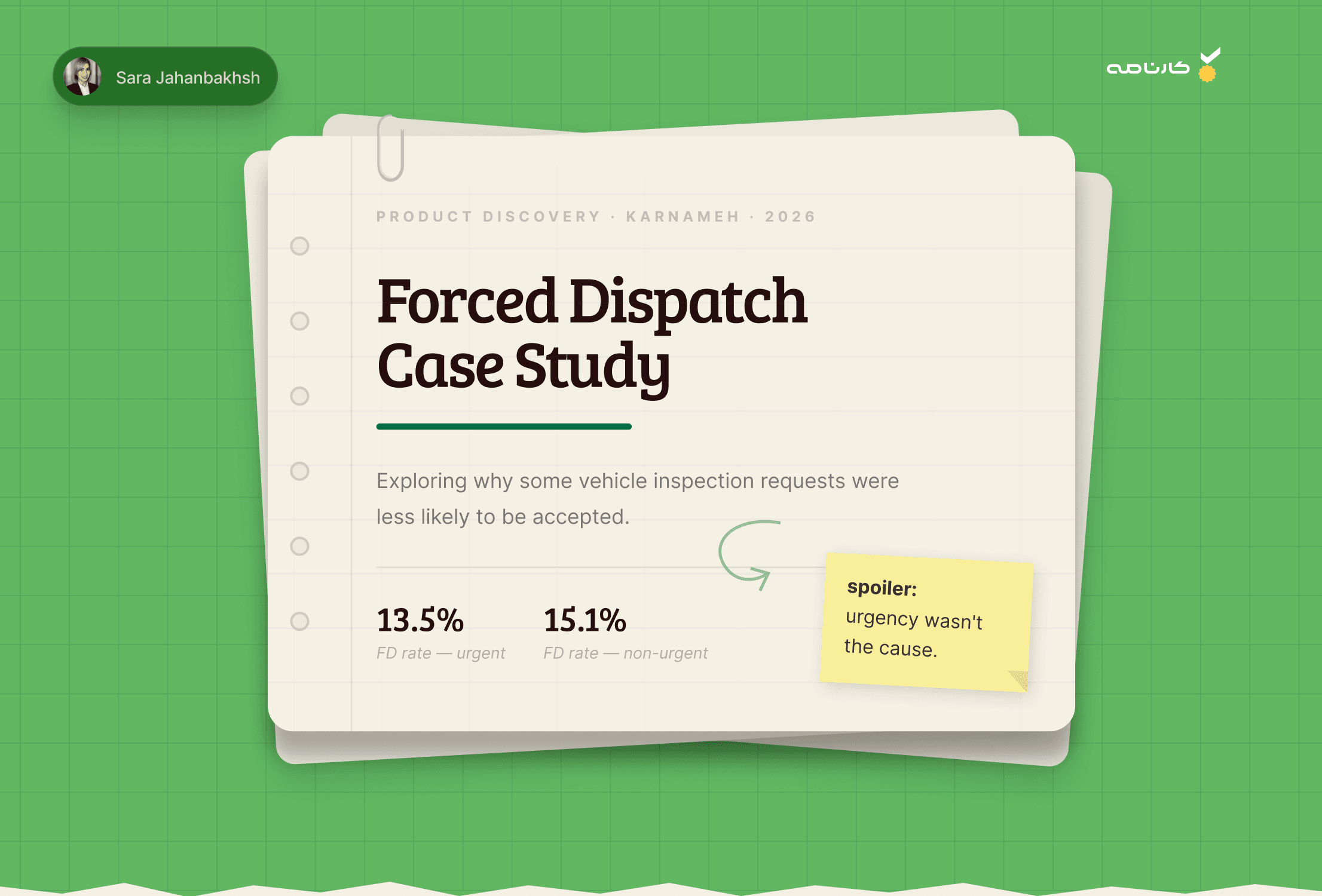
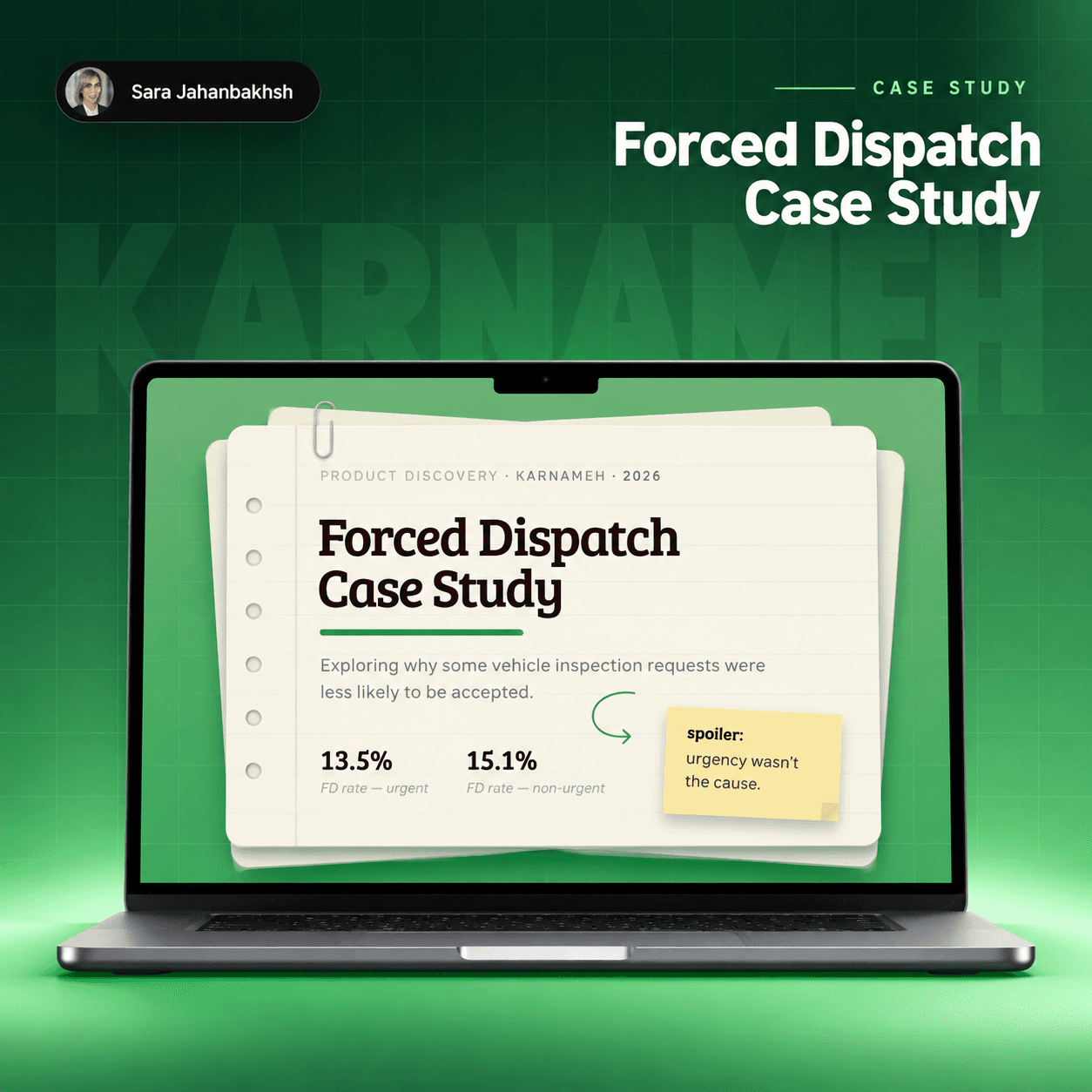
Urgency alone did not explain the pattern: the Force Dispatch rate was 13.54% for urgent requests and 15.14% for non-urgent requests. Nearly 31.8% of non-urgent requests had less than an hour left.
Vehicle complexity, time of day, location, expected earnings and capacity could stack. The resulting question became: how might we predict and reduce dispatch difficulty before assignment?
The team tested a risk signal before assignment and targeted incentives for the hardest requests. The model identified 71% of high-risk cases at 68% precision, helping operations intervene earlier instead of escalating after a request stalled.
Targeted incentives lifted acceptance by 12% and cut Force Dispatch by 18% in the intervention. Across the initiative, the study reports 16% fewer Force Dispatch cases, 9% higher acceptance, 18% faster assignment and 14% fewer manual interventions.